Showing posts with label under. Show all posts

Monday, February 24, 2014

Neon Buddha Women"s Plus-Size Womans Size Under The Sun Tunic, Global Black, 1X

Description

End your beach day in cozy comfort with our rolled cowl neck tunic. Pair with Capri tights. Your favorite jeans and away you go. Signature neon Buddha body. Designed in Canada. Signature neon Buddha fabric. Logo stud detail. Perfect for travel, work, home, yoga and you. 4 way stretch. 100-percent preshrunk for the perfect fit.


Features


  • End your beach day in cozy comfort with our rolled cowl neck tunic.

  • Pair with Capri tights. Your favorite jeans and away you go.


Details & Price

This product was manufactured by Neon Buddha.


Brand: Neon Buddha
UPC: 623957126007
List Price: $100.10.
New Price: $100.10 Only 1 left
5 Stars(Read Reviews)

Buy Now on Amazon.com


Neon Buddha Women"s Plus-Size Womans Size Under The Sun Tunic, Global Black, 1X

Wednesday, November 6, 2013

Study: 38 percent of kids under 2 use smartphones or tablets

More than a third of children under the age of 2 use mobile media, according to a recently released report from Common Sense Media. Specifically, the study found that 38 percent of kids under age 2 have used tablets or smartphones.

The nonprofit agency conducted a similar study in 2011. And two years is apparently a long time. Back then, in the halcyon days of the iPhone 4, the number of kids under 2 messing with mobile devices was roughly 10 percent.

When it comes to daily use of technology, the numbers are also rising. "The percent of children who use mobile devices on a daily basis ? at least once a day or more ? has more than doubled, from 8% to 17%," according to the report.

Jim Steyer, founder and CEO of Common Sense Media, spoke to Mashable about the report's findings.

Via Mashable:

"We're seeing a fundamental change in the way kids consume media," Steyer said. "Kids that can't even talk will walk up to a TV screen and try to swipe it like an iPad or an iPhone."

The group's 40-page report is full of statistics, many of which are likely to make you mourn for the changing nature of childhood. In 2011, for example, kids under the age of 8 spent, on average, about five minutes per day on phones or tablets. In 2013, the number tripled to 15 minutes.

The American Academy of Pediatrics (AAP) recommends that children under the ago of 2 not spend any time in front of media screens, including phones, tablets and television. "A child's brain develops rapidly during these first years, and young children learn best by interacting with people, not screens," the AAP writes.

Technology & ElectronicsCommon Sense Media

View the original article here

Monday, August 19, 2013

'Incoherent' Obama policy on Egypt under fire as violence spreads

As Egypt descends into chaos, President Obama is facing increasing criticism that an "incoherent" policy toward the country -- much like U.S. policy toward Syria -- is putting U.S. money and influence on the line without a clear end-game.

The Obama administration claims to be staying neutral in the violent confrontation between the military-backed government and Muslim Brotherhood supporters of ousted President Mohammed Morsi. More than 600 people have been killed so far across the country.

"America cannot determine the future of Egypt," Obama said Thursday, in brief remarks from Martha's Vineyard, where he's vacationing, as he appealed for calm and condemned the violence.

Yet the administration is sending mixed signals. While the president directly spoke out against the military-backed government on Thursday -- and canceled upcoming joint military exercises -- the U.S. has refused to label Morsi's ouster a coup. That means, under U.S. law, the administration can continue to send $1.5 billion in annual aid to the Egyptian government.

The mixed signals raise concern that the U.S. is simply breeding distrust on both sides.

The argument in favor of aid is that it helps secure U.S. influence in Cairo, which is critical not only to Mideast stability but also the security of U.S. ally Israel. Yet the crackdown this week showed U.S. influence with the Egyptian military is waning, analysts warned. A wave of phone calls from top administration officials to their counterparts in Cairo, as well as an unconventional delegation of U.S. lawmakers to the country, did not quell the unrest.

"While President Obama 'condemns the violence in Egypt,' his administration continues to send billions of taxpayer dollars to help pay for it," Sen. Rand Paul, R-Ky., said in a statement on Thursday.

John Bolton, former U.S. ambassador to the U.N. under the George W. Bush administration, called the current policy "completely incoherent."

"You can't have your press secretary say ... that this is up for Egyptians to answer, and then try and get in the middle of it," Bolton said.

Security analysts, diplomats and editorial pages across the country are deeply divided over whether Obama should throw U.S. weight behind the military or the protesters, or stay out entirely. Few, though, are praising the administration for its current policy.

Bolton said the wisest thing for the president to do would be to not say much at all. He claimed that the reality for the U.S. is that the best option is for the Egyptian military to stay in control, "ugly as it may be." The Muslim Brotherhood, he said, is an "armed militia" and not a political party.

But he said the United States' fuzzy policy only tells the current government "we're irrelevant."

Others say the U.S. should take a stand by declaring the overthrow a coup and/or suspending aid.

"I think we may have to (suspend aid) as a short-term measure now," the Brookings Institution's Michael O'Hanlon told Fox News, likening the crackdown to Tiananmen Square.

The Washington Post published a blistering editorial on Thursday, accusing the administration of being "complicit" in the interim government's crackdown.

Dalibor Rohac, a policy analyst with the Cato Institute, told FoxNews.com that the "equivocating" over whether to call the overthrow a coup is "truly embarrassing."

He said it's evident the U.S. has "no leverage," and "the fact is we are taking sides by sending them this aid money."

Barak Barfi, a research fellow at The New America Foundation, said a big problem is the amount of aid the U.S. sends simply isn't enough to buy that much influence anymore.

"A billion dollars does not buy as much as it could in 1980," he told Fox News. Yet, Barfi said, if the U.S. suspends the aid, the move would be used by the generals to stoke an anti-foreign backlash and consolidate support for itself.

The U.S. has struggled to articulate its position as the situation became increasingly dire in the aftermath of Morsi's ouster. Pressed earlier this month by a reporter to explain the U.S. stance on whether the ouster was a coup, State Department spokeswoman Jen Psaki said: "There was a determination made that we (do) not need to make a designation."

The chaos has raised broader and more troubling questions about the impact of the so-called Arab Spring, which the Obama administration has touted. The overthrow of Hosni Mubarak was arguably the most significant transition to come out of the 2011 sea change in the Middle East. But the country is now caught between an Islamist movement with questionable credentials on democracy and a military-backed government that is flirting with the tactics of the Mubarak reign.

In nearby Syria, a civil war has engulfed the country amid modest U.S. steps to aid the opposition. And in Libya, militants attacked the U.S. compound in Benghazi last fall despite U.S. military support for the overthrow of Muammar Qaddafi.

Obama, speaking in Martha's Vineyard, acknowledged that he's being accused of supporting both sides in Egypt, but urged Egyptians to focus on righting their own problems.

"I know it's tempting inside of Egypt to blame the United States or the West or some other outside actor for what's gone wrong. We've been blamed by supporters of Morsi. We've been blamed by the other side as if we are supporters of Morsi," he said. "That kind of approach will do nothing to help Egyptians achieve the future that they deserve."

FoxNews.com's Judson Berger contributed to this report.


View the original article here

Friday, August 9, 2013

Former Redneck Olympics under way in Maine

HEBRON, Maine (AP) — Despite being forced to changes its name, the event formerly known as the Redneck Olympic Games continued its tradition Saturday of holding unorthodox competitions like lawn mower races, mud runs and tire burnouts.

A full day of events was on tap during the Maine Redneck "Blank" Games. Organizer Harold Brooks changed the name under pressure from the International Olympics Committee, but noted that "everyone knows what the 'blank' stands for."

Friday's events included a wedding and a demolition derby. Other events over the weekend included bobbing for pigs' feet, toilet seat horseshoes and a greased watermelon relay race.

The idea behind the event, Brooks said, was to have what amounts to a great big outdoor picnic and pig roast for hardworking people who've earned the right to blow off some steam.

Being a redneck, he said, isn't about living in a trailer, or getting drunk.

"A redneck is someone who works hard. They say their neck is red because they work outside. A redneck can make fun of himself and have a good time," said Brooks, who's a general contractor.

The Redneck Olympic Games kicked off three years ago. But the name was changed after the International Olympic Committee came after him, telling him he couldn't brand his event as an Olympic event.

That still doesn't sit well with Brooks because he doesn't think anyone should own the rights to a word.

"The word was around before they were around," he said, pointing to the Olympics' origins in ancient Greece. "If they want to complain, then they should have the Greeks call and tell me to stop using it."


View the original article here

Thursday, July 18, 2013

Loch Ness Monster mystery could be explained by a fault line under the lake

Could the Loch Ness Monster actually be the result of a fault line? (AP)The legend of the Loch Ness Monster has persevered for more than 200 years. But could tales of a prehistoric sea creature located in a deep Scottish body of water be explained by science?
That’s the source of a new theory, which speculates that the Loch Ness Monster may actually be a fault line lying underneath the Scottish lake.

Even after 200 years of technological advances since the first reported spotting in 1806, rumors of the Loch Ness Monster continue to persist. In fact, technology has played a role in spawning some Nessie theories.

For example, in 2011, local boat skipper Marcus Atkinson produced a sonar image of what he described as a large object following his boat for several minutes at a depth of 75 feet.

And in 2012, George Edwards shared a photo of an unexplained image in Loch Ness. Skeptics have said the image was likely of a log floating atop the water.

Scientific American reports that Italian geologist Luigi Piccardi believes the Great Glen fault system is actually responsible for mysterious bubbles and the shaking ground commonly associated with supposed creature sightings.

"There are various effects on the surface of the water that can be related to the activity of the fault," Piccardi told Italian newspaper La Repubblica.

And he has some compelling evidence to back up his case. For example, he notes that many of the alleged sightings have happened at times when the 62-mile fault was experiencing an active period.

"We know that this was a period [1920-1930] with increased activity of the fault. In reality, people have seen the effects of the earthquakes on the water."

So, what do you think? There have been strange reports near Loch Ness going all the way back to the 7th century. Are the numerous sightings over the years proof of the creature’s existence, mere coincidence, or even a self-fulfilling prophecy continued on by people who want to take part in the legend? Or, could it all actually simply be explained by a natural phenomenon found across the planet?


View the original article here

Sunday, June 23, 2013

Nigerian cook survives two days under sea in shipwreck air bubble

By Joe Brock

WARRI, Nigeria (Reuters) - After two days trapped in freezing cold water and breathing from an air bubble in an upturned tugboat under the ocean, Harrison Okene was sure he was going to die. Then a torch light pierced the darkness.

Ship's cook Okene, 29, was on board the Jascon-4 tugboat when it capsized on May 26 due to heavy Atlantic ocean swells around 30 km (20 miles) off the coast of Nigeria, while stabilizing an oil tanker filling up at a Chevron platform.

Of the 12 people on board, divers recovered 10 dead bodies while a remaining crew member has not been found.

Somehow Okene survived, breathing inside a four foot high bubble of air as it shrunk in the waters slowly rising from the ceiling of the tiny toilet and adjoining bedroom where he sought refuge, until two South African divers eventually rescued him.

"I was there in the water in total darkness just thinking it's the end. I kept thinking the water was going to fill up the room but it did not," Okene said, parts of his skin peeling away after days soaking in the salt water.

"I was so hungry but mostly so, so thirsty. The salt water took the skin off my tongue," he said. Seawater got into his mouth but he had nothing to eat or drink throughout his ordeal.

At 4:50 a.m. on May 26, Okene says he was in the toilet when he realized the tugboat was beginning to turn over. As water rushed in and the Jascon-4 flipped, he forced open the metal door.

"As I was coming out of the toilet it was pitch black so we were trying to link our way out to the water tidal (exit hatch)," Okene told Reuters in his home town of Warri, a city in Nigeria's oil-producing Niger Delta.

"Three guys were in front of me and suddenly water rushed in full force. I saw the first one, the second one, the third one just washed away. I knew these guys were dead."

What he didn't know was that he would spend the next two and a half days trapped under the sea praying he would be found.

Turning away from his only exit, Okene was swept along a narrow passageway by surging water into another toilet, this time adjoining a ship's officers cabin, as the overturned boat crashed onto the ocean floor. To his amazement he was still breathing.

FISH FEASTED ON THE DEAD

Okene, wearing only his underpants, survived around a day in the four foot square toilet, holding onto the overturned washbasin to keep his head out of the water.

He built up the courage to open the door and swim into the officer's bedroom and began pulling off the wall paneling to use as a tiny raft to lift himself out of the freezing water.

He sensed he was not alone in the darkness.

"I was very, very cold and it was black. I couldn't see anything," says Okene, staring into the middle distance.

"But I could perceive the dead bodies of my crew were nearby. I could smell them. The fish came in and began eating the bodies. I could hear the sound. It was horror."

What Okene didn't know was a team of divers sent by Chevron and the ship's owners, West African Ventures, were searching for crew members, assumed by now to be dead.

Then in the afternoon of May 28, Okene heard them.

"I heard a sound of a hammer hitting the vessel. Boom, boom, boom. I swam down and found a water dispenser. I pulled the water filter and I hammered the side of the vessel hoping someone would hear me. Then the diver must have heard a sound."

Divers broke into the ship and Okene saw light from a head torch of someone swimming along the passageway past the room.

"I went into the water and tapped him. I was waving my hands and he was shocked," Okene said, his relief still visible.

He thought he was at the bottom of the sea, although the company says it was 30 meters below.

The diving team fitted Okene with an oxygen mask, diver's suit and helmet and he reached the surface at 19:32, more than 60 hours after the ship sank, he says.

Okene says he spent another 60 hours in a decompression chamber where his body pressure was returned to normal. Had he just been exposed immediately to the outside air he would have died.

The cook describes his extraordinary survival story as a "miracle" but the memories of his time in the watery darkness still haunt him and he is not sure he will return to the sea.

"When I am at home sometimes it feels like the bed I am sleeping in is sinking. I think I'm still in the sea again. I jump up and I scream," Okene said, shaking his head.

"I don't know what stopped the water from filling that room. I was calling on God. He did it. It was a miracle."

(Editing by Tim Cocks and Giles Elgood)


View the original article here

Tuesday, May 14, 2013

Wash. State graduate wears wedding gown under robe

PULLMAN, Wash. (AP) — With friends and family already gathered for her graduation from Washington State University, Cassie Dotts thought it would be a good time for another ceremony — her wedding.

She married University of Idaho fisheries science graduate Ben Ho in a ceremony on Friday in Moscow, Idaho. Then she received her doctorate in veterinary medicine in Saturday's WSU graduation in Pullman, Wash.

The Moscow-Pullman Daily News reports (http://bit.ly/10eaEQl ) that Dotts wore her cap and gown over her wedding dress for people who wanted to see her as both a graduate and newlywed.

The couple plans to move to Dotts' native Nevada where she plans to work as a veterinarian in Las Vegas.

___

Information from: The Moscow-Pullman Daily News, http://www.dnews.com

View the original article here

Wednesday, April 3, 2013

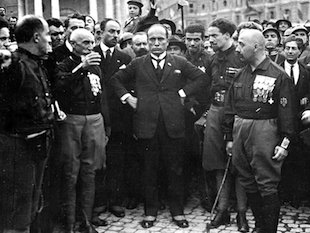
' Most secret ' bunker of Mussolini, which was discovered under the historic Roman structure

A secret bunker meant to House Benito Mussolini was discovered in Rome (Wikicommons) workers in Rome I stumbled upon a top-secret bunker once belonging to the former fascist leader Benito Mussolini, hidden beneath the historic Palace Venice.

The discovery is the twelfth such bunkers as is said to have been the "most secret" of the former strongman's hideouts, according to the Italian magazine La Stampa.

And in what has become a tradition of sorts, the bunker soon will go on display for the public to tour and document, as was done with other recently discovered bunkers of Mussolini. City officials plan to install lighting, a touchscreen system and an air siren, meant to simulate the sounds of an imminent air raid.

The nine rooms hidden compound was reportedly unearthed by the Superintendent Anna Imposing city and the architect Carlo Serafini, who were busy inspecting a project of restoration of the 15th-century building that sits atop the bunker. The Venice Palace currently houses a National Museum and it was a historically significant structure for centuries, having been used by high-ranking members of the Catholic Church and other prominent figures over the years.

During their inspections, Seraphim and Imposing noticed a small wooden hatch, which led up to the bunker of almost 50 metres underground.

"When we saw the concrete, was all clear," Sahoo told the newspaper. "Is the twelfth bunker of Rome-last bunker of Mussolini".

Although the bunker was never finished, there are holes in the wall meant for electricity and indoor plumbing, Serafini says that the structure is so solid that would probably have kept under an assault by Allied forces.

"The walls rest on the foundations of an ancient tower and are almost two metres thick in some places," Sahoo told the newspaper. "It would probably be only designed for Mussolini himself and another person; more than likely mistress, Claretta Petacci. "


View the original article here