Showing posts with label Experts. Show all posts

Sunday, September 1, 2013

UN experts tour site of attack as Assad gives warning to West

United Nations experts were in the eastern suburbs of Damascus Thursday for a third day of inspections of areas struck by a purported chemical weapons attack, as Syrian President Bashar Assad said that his country "will defend itself against any aggression," signaling defiance to mounting Western warnings of a possible strike.

Chemical weapons inspectors toured stricken rebel-held areas, ahead of a weekend departure that could clear the path for military action against Syria.

All the evidence gathered by the U.N. team will be brought to the Hague, Netherlands, where it will be separated into categories in an Organization for the Prohibition of Chemical Weapons (OPCW) laboratory. Samples will then be sent to undisclosed, OPCW-designated and certified laboratories in Europe for analysis. The U.N. refuses to disclose where the labs are located, apparently to safeguard the integrity of the investigation.

The evidence will be transported to the Hague inside special OPCW containers that are sealed for safety and to ensure that the samples themselves are not compromised. Chain of custody during the transportation process is said to be impeccable, with state of-the-art logging and chronicling of every step taken.

U.N. Secretary-General Ban Ki-moon urged Western powers to hold off on any decisions until his experts can present their findings to U.N. member states and the Security Council.

Ki-moon will be given a briefing by the head of the inspection team, “in the coming days,” a U.N. spokesman told Fox News.

A formal written report could take many days and up to a couple of weeks.

The suspected chemical weapons attacks took place Aug. 21 in suburbs east and west of Damascus. The humanitarian group Doctors Without Borders has said the strikes killed 355 people.

The Syrian regime has denied a role in the attacks, suggesting instead that anti-government rebels carried them out to frame Assad.

The Syrian president struck a tough tone Thursday. His comments, from a meeting with a delegation from Yemen, were reported by the state news agency SANA.

"Threats to launch a direct aggression against Syria will make it more adherent to its well-established principles and sovereign decisions stemming from the will of its people, and Syria will defend itself against any aggression," Assad said.

It's not clear if Assad would retaliate for any Western strikes or try to ride them out in hopes of minimizing the risk to his own power.

Already, the conflict has sparked growing anxiety among civilians in neighboring countries.

Israelis stood in long lines Thursday for government-issue gas masks. Turkey's government crisis management center said officials had designated bunkers at seven areas along the border. And Lebanon's foreign minister, Adnan Mansour, warned that international military action against Syria would pose a "serious threat" to the security and stability of the region, particularly in Lebanon.

In one of the videos, the inspectors stood next to their U.N. vehicles, and the accompanying caption indicated Thursday's date and the location. In another video, the U.N. convoy was seen driving through a street, accompanied by armed rebels in pickup trucks.

On two previous tours this week, the inspectors visited a western suburb of the city as well as Zamalka where they took biological samples from suspected victims.

In countries neighboring Syria, governments began taking precautions against possible Syrian retaliation.

Israel has called up reservists and deployed missile defense batteries in preparation for a possible Syrian response to an American attack.

In Turkey, the government's crisis management center said on Twitter that a team of 100 chemical weapons experts were sent to the border area, which was being screened for any signs of chemical attacks.

Turkey is Assad's strongest critic and has backed Syria's opposition and rebels. The country said this week it would take part in any international coalition that would move against the Syrian government.

Fox News’ Jonathan Wachtel and The Associated Press contributed to this report.


View the original article here

Thursday, April 4, 2013

Experts discuss the psychology of ' Star Trek ' vs. ' Star Wars '

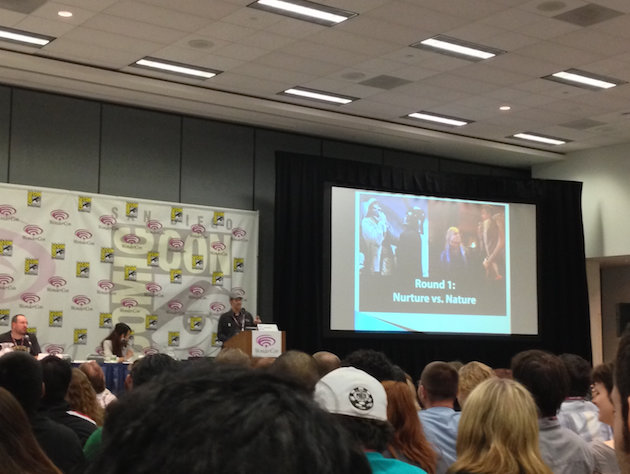
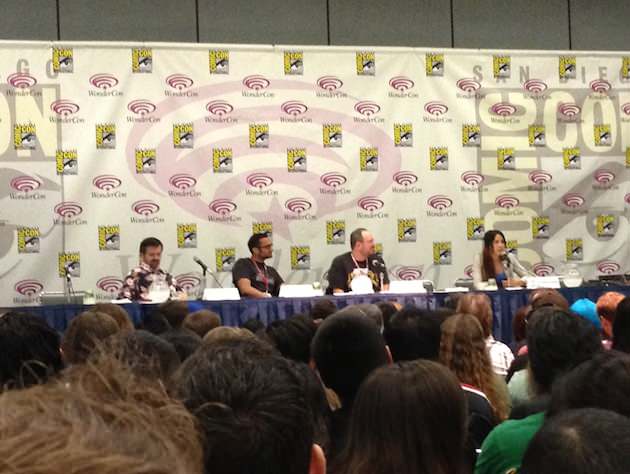
WonderCon 2013: the psychology of Star Trek vs. Star Wars (Eric Pfeiffer Yahoo News) ANAHEIM, Californiathe opening day on Friday of Wondercon 2013, swords were drawn at the beginning. Or, more specifically, the light sabers were drawn and the Phasers were set to kill.

Four experts, including two psychologists, discussed four specific topics as part of an epic breakdown by analyzing their strengths and weaknesses of "Star Wars" and "Star Trek".

To an outsider, the debate might seem trivial. But fans of each series, the differences are profound, long term contrasts with the more cerebral science fiction of "Star Trek" fantasy-driven, emotional stories of the "Star Wars universe".

As the debate opened, it was clear that a majority of the hundreds of participants Wondercon that packed into the Ballroom featured, er, force, in support of "Star Wars".

Well, first of all, there are so many Trekkies here because they are all at work today, "joked NYU clinical psychologist Dr. Ali Mattu.

Round 1: Nature vs. Nurture

Thanks the prequel to "Star Wars" villain, we now know that the evil Darth Vader wasn't always bad. But the biggest villain of "Star Trek," Noonan Khan Singh, was literally born evila product of genetic engineering that it considered itself superior to younger men. So what is the best story?

"Vader is someone who you can probably diagnose with borderline personality disorder" Mattu said. "In fact, the American Psychological Association hosted a Conference on this topic in 2007. Whereas Khan is the most dangerous thing in social psychology when you dehumanize people. Get things like eugenics wars and the Nazis. "

"Khan had a subsequent transformation of life," said Larry Nemecek, author of "Star Trek: the Next Generation Companion." "When we met first in the television series" Stark Trek ", was a criminal. But when he returned in the second film ("the wrath of Kahn"), was shot and killed his wife and his adopted planet ruined. "

For its part, Dr. Andrea Letamendi, a psychologist, said Vader's story was more convincing because of its complexity.

"George Lucas really has an understanding of what hurts," he said. "There is a refinement of what makes the risk, loss and antisocial behaviour. We are reminded that humans are complex. "

For its part, writer "Robot Chicken" Hugh Sterbakov showed a lack of two evil leaders: "they're both really bad to choose assistants," he added, stressing that in the accompanying picture for the Panel, both men are considered men lifting into the air from their throats.

Round 2: strength and stamina

But that, in two sagas competitors exceeds the most adversity? It was the Enterprise crew, overcoming the death of Spock? Or Luke Skywalker seeing his murdered aunt and uncle and forced into a whole new world?

Dr Letamendi stated that both series have similarities in the way that their characters keep their behavioural patterns even after trying situations. For example, in "Star Trek 2," Spock is willing to accept the death during a computer simulation unwinnable. Later in the film, he sacrifices his life to save the crew of the Enterprise.

And in "The Empire Strikes Back, Luke Skywalker is quick to anger during a test of character in the caves of Dagobah. Later in the film succumbs to the same behavior and suffers for it, when he is ready to confront Vader.

"The main point is not winning or losing but how it went," said Nemecek.

Round 3: artificial intelligence

The speakers were not allowed to speculate on who would win in a fight between Captain Kirk and Han Solo. But they were free to debate that has the best robot.

There is a spectrum of how they treat artificial intelligence in ' Star Trek, ' "said Nemecek. "Creator of data was an outcast. It is a complex question of "Star Trek."

LETAMENDI responded saying that the Androids of "Star Wars" were more human because they are less sympathetic, citing the Uncanny Valley concept, which States that humans are emotionally put off by artificial intelligence more closely resembles actual human appearance and behavior.

But disagreeing Mattu Nemecek, agreeing with that the wide variety of artificial intelligence on display in the universe of "Star Trek" was met with different answers from different cultures.

Round 4: the test

The speakers then passed to the final round to claim that saga shows the trip major for his characters. From there, it was left to the audience to decide who had won the debate.

"It's a motivational inspirational, story that goes to the core of what it means to experience self-realization and self _ individualization," Letamendi said of "Star Wars". "It's actually what psychologists consider the most advanced state of being. And have bad-ass costumes. "

Mattu offered a counterpoint, saying his experience:

"What happened to me when I saw" Star Trek "was that I could see myself there. It was a future that we could see, a mirror to ourselves. As with empathy, science and knowledge we can grow, improve how societies and overcome. "

"Plus, only in" Star Trek "can you blow up a planet and create one simultaneously using science."

Ultimately, the cheers were strong for both sides, although it seemed that the argument of "Star Trek" came out slightly ahead, what had seemed like a public reverse stacked in favor of "Star Wars" at the onset.

But all participants who felt disappointed with the results, offered some positive news Mattu.

"That's how we all win: we all have J.J. Abrams now."

These experts may eventually resolve the debate by Star Trek vs. Star Wars? (Eric Pfeiffer Yahoo News


View the original article here